Begin with the daily frustration
The best small improvement fixes something you notice every day. Perhaps keys have no landing spot, a drawer catches or a dark corner is difficult to use. Write down three irritations before browsing products. Then choose one that can be solved with a modest, clearly bounded project.
Set a budget that includes preparation materials and cleanup, not just the visible finish. Tape, filler, abrasives and the correct fixings are easy to forget, yet they often determine whether a project looks considered or rushed.
Refresh a small painted surface
A door, an existing shelf or a small wall can change the feel of a room without requiring a full repaint. Start by checking the condition of the surface. Clean it, repair appropriate small defects and use primer and paint compatible with the material. Follow drying and recoating instructions.
In older homes, do not sand or disturb suspect coatings until potential hazards have been assessed. A quick cosmetic project is not worth creating unsafe dust. When the existing finish is uncertain, seek suitable professional guidance.
Give everyday items a home
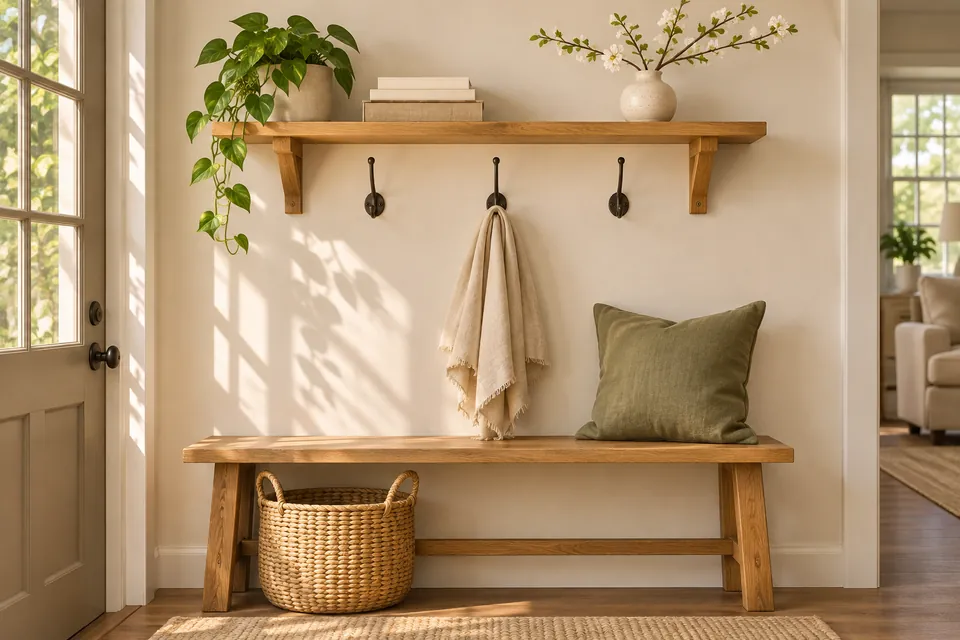
An entryway often needs fewer things, not a larger piece of furniture. Try a small tray for keys, a basket for items going out the door and hooks positioned where they are easy to reach. Live with a temporary layout before drilling.
For anything wall-mounted, identify the wall construction, choose appropriate fixings and check for concealed services before making holes. Observe the hardware’s load limits. If you cannot identify a safe fixing method, use a freestanding solution.
Improve what you already own
Loose handles, poorly aligned cupboard doors and missing furniture pads can make a room feel neglected. Check accessible fasteners and consult the hardware instructions before making adjustments. Tighten gently, especially in particleboard, where stripped holes are easy to create.
A new set of handles can be a small visual upgrade, but measure the existing hole spacing first. Keeping the same spacing may save filling, drilling and refinishing work.
Use lighting and textiles deliberately
Move a portable lamp to the place where you actually read or work. Choose a bulb compatible with the fixture and within its ratings. A washable cushion cover, a simple curtain adjustment or a rug already used elsewhere can also change a room without introducing a building project.
Keep cords out of walking routes and follow fixture instructions. Work that alters fixed electrical wiring belongs outside the scope of this beginner weekend list.
Finish one thing well
Limit the weekend to a project you can complete, clean up and use. Keep leftover paint labeled, record the hardware you installed and return tools to storage. Take a photo for your own notes so the next improvement starts with a clear picture of what has changed.
A thoughtful home grows through small decisions. The most satisfying upgrade is often the one that quietly makes tomorrow morning easier.
A note from the workbench
Try a no-spend version first: rearrange, declutter or repair before you decide what to buy. A day of using the new layout reveals more than a shopping cart.
Original sample editorial content prepared for this starter website. Review for your audience and project before publication. Images are original AI-generated editorial illustrations, not project build documentation. Always follow product instructions and seek qualified help for work beyond your skills.